
Vanathy Paranthaman
REGISTERED NURSE PSYCHOTHERAPIST | SOMATIC THERAPY | COMPASSIONATE INQUIRY | PSYCHEDELIC PREPARATION & INTEGRATION | GOTTMAN METHOD COUPLES THERAPY
I believe in the resilience of the human spirit and the remarkable intelligence our system holds. We are wired to adapt, and every adaptation makes sense in the context in which it developed. Many of the patterns that create suffering today once helped us survive. My role isn't to fix you. It's to help you understand those adaptations with curiosity and compassion, decide whether they still serve you, and develop new ways of responding when they don't. I believe we've only begun to understand what people are capable of when they feel safe enough to reconnect with themselves.
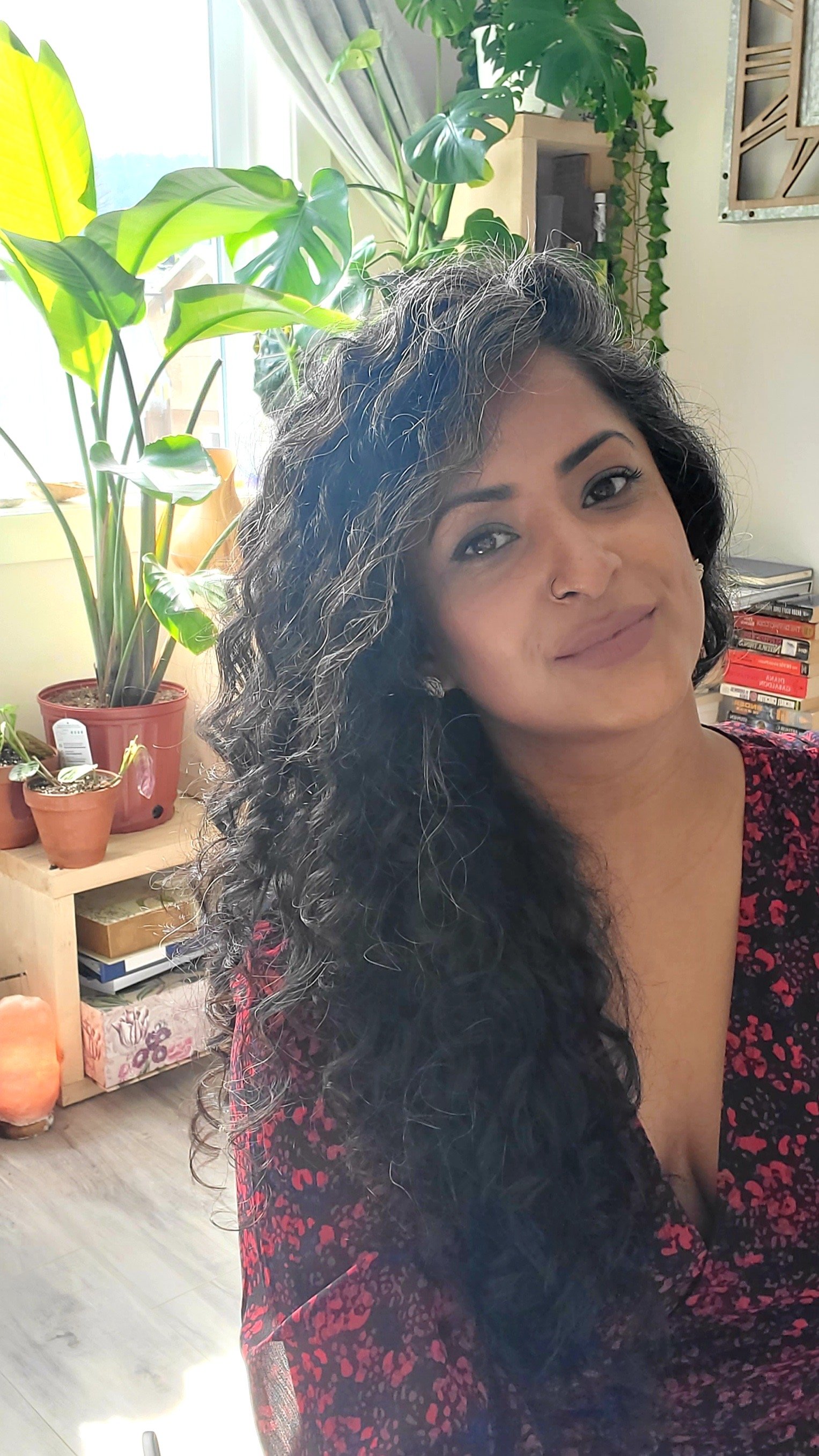
I work with adults navigating:
-
For much of my life, I believed there was something fundamentally wrong with me.
I grew up in an environment where fear, criticism, and unpredictability shaped the way I saw myself. By adulthood, I was living with PTSD and complex PTSD without fully understanding what had happened to me. I spent years trying to think my way out of pain, convinced that if I could just try harder or become different, I would finally feel okay.
At the same time, I found myself drawn to a different question: Why do people do what they do?
Long before I entered the field of psychotherapy, I was fascinated by Eastern philosophy and contemplative traditions that viewed suffering not as evidence of brokenness, but as an invitation to deeper understanding. Those ideas stayed with me, but it wasn't until navigating my own healing that they became deeply personal.
Healing, I discovered, wasn't about becoming someone new. It was about understanding the adaptations that had helped me survive and learning new ways of relating to myself and the world.
My years in palliative care reinforced this perspective. Sitting with people at the end of life stripped away what was superficial and brought into focus what mattered most: connection, meaning, authenticity, and the relationships we have with ourselves and others. Later, my work in addictions and correctional settings showed me that when we truly understand someone's history, their behaviour almost always begins to make sense.
Whether through my own experiences or the privilege of walking alongside many people throughout my career, I keep arriving at the same conclusion:
Nothing about you is broken.
-
My approach is grounded in the belief that lasting change doesn't come from fighting ourselves. It comes from understanding ourselves.
I integrate neuroscience, somatic psychotherapy, attachment theory, parts work, mindfulness, and evidence-based psychological approaches with perspectives drawn from Eastern philosophy and contemplative practice. While these frameworks may appear different on the surface, they share a common thread: healing begins when we bring awareness to what has been unconscious and compassion to what has been judged.
Rather than asking, "How do we get rid of this symptom?" I'm often asking, "What purpose did this serve? What was your mind and body trying to protect you from?"
Together, we'll explore the patterns that have shaped your life, build the capacity to work with your nervous system instead of against it, and create space for new ways of responding that feel more aligned with who you are today.
-
One of the most painful beliefs many people carry is that their suffering means there is something wrong with them.
I don't believe that.
I believe our minds, bodies, and spirits possess an extraordinary capacity to adapt. The ways we think, feel, and relate to the world are often intelligent responses to the environments and experiences that shaped us. Anxiety, perfectionism, emotional numbness, people-pleasing, hypervigilance, and disconnection didn't arise because you are broken. In many cases, they began as creative attempts to protect you.
This is why I hold a deep belief in the wisdom of human adaptation. Rather than viewing these patterns as pathology, I see them as evidence of the remarkable ways human beings learn to survive. They make sense when we understand the story behind them.
My role isn't to fix you. It's to help you make sense of those adaptations with curiosity and compassion so you can move from automatic survival to conscious choice, cultivating new ways of relating to yourself, others, and the world around you.
Above all, I trust in the innate intelligence of the human mind, body, and spirit. Even when life has left us feeling fragmented or disconnected, I believe that capacity for healing remains. Therapy isn't about becoming someone else. It's about creating the conditions where your own wisdom can emerge and guide you back to yourself.
-
I don't believe healing is about becoming someone different.
I believe it's about understanding yourself so deeply that you no longer have to live on autopilot. When your experiences begin to make sense, you gain the freedom to choose rather than simply react. You begin to see that many of the qualities you've judged most harshly were once remarkable expressions of resilience.
And from that place of understanding, change often follows naturally.
Your adaptations made sense.
They don't have to define your future.
Together, we'll understand the patterns that have shaped your life, identify the skills that may have been missing early on, and help you develop new ways of relating to yourself, others, and the world.
Education
Bachelor of Science in Nursing (BScN)
Bachelor of Arts in Psychology (BA)
Training
Compassionate Inquiry
Internal Family Systems & Psychedelics
Gottman Method Couples Therapy
Certified Clinical Trauma Professional
Integrative Somatic Trauma Therapy
Integrative Attachment Therapy
Clinical Somatic Movement Therapy
Breathwave Facilitator Training
SMART Recovery for Professionals
Hospice Palliative Care Nursing (CHPCN)
TEACH Tobacco Cessation
Psychedelic-Assisted Therapy and Integration